You did everything right.
You researched ingredients. You learned which chemicals to avoid. You invested in that highly-rated, beautifully packaged, clean-beauty shampoo that promised healthier hair without the "toxic" stuff.
And now your hair looks worse than it did before you started caring.
Maybe it's greasy no matter how often you wash. Maybe it's dry and straw-like despite all those nourishing botanical oils. Maybe it's limp, lifeless, coated in something you can't seem to rinse out. Maybe your curls went flat or your scalp started itching.
You're not imagining it. And you're not alone.
The clean beauty movement has convinced us that "cleaner" automatically means "better." But that equation is missing a critical variable: you. Specifically, your hair, its unique characteristics, needs and quirks.
Here's what nobody in the clean beauty aisle is telling you: a product can be perfectly gentle, beautifully formulated, and completely wrong for your hair.
The Clean Beauty Promise (And Where It Falls Short)
What "Clean" Actually Means
Here's an uncomfortable truth: "clean" has no official definition.
There's no regulatory standard. No legal requirement. No certification body that determines what qualifies as "clean" hair care. Each brand defines the term however it wants.
Generally, "clean" implies some combination of:
- No sulfates (or no "harsh" sulfates)
- No parabens
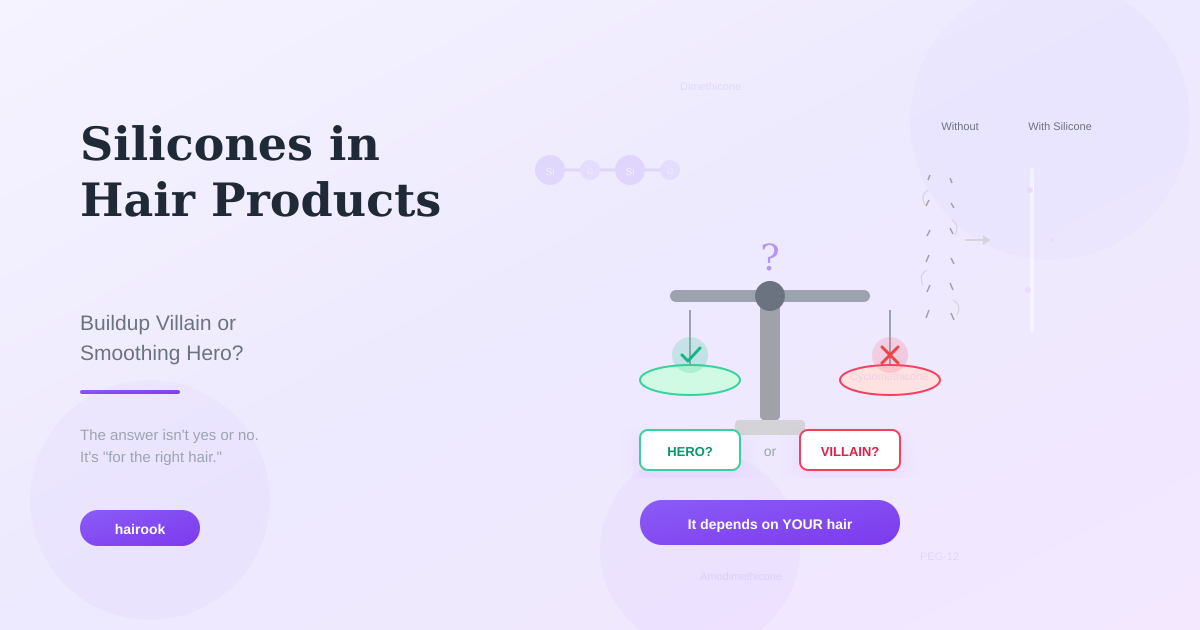
- No silicones
- No synthetic fragrances
- No [insert current ingredient villain]
What "clean" does not imply: that the product will work for your specific hair.
The label tells you what's been excluded from the formula. It tells you nothing about whether what's included is right for you.
The Assumption That Cleaner = Better
Somewhere along the way, marketing blurred the line between "gentle formulation" and "universally effective."
The logic seems sound on the surface: harsh ingredients cause problems, therefore gentle ingredients solve problems. But hair care isn't that simple.
A product can be:
- Gentle AND ineffective for your hair type
- Clean AND cause buildup on your specific strands
- Natural AND trigger irritation on your particular scalp
- Free from everything "bad" AND still completely wrong for you
Gentleness is not the same as compatibility. A formula can be beautifully mild and still fail your hair not because it's poorly made, but because it's poorly matched.
Why Good Ingredients Can Give Bad Results
The Missing Variable: Your Hair
Ingredients don't work in isolation. They interact with the hair they're applied to. And hair varies enormously from person to person.
Your results depend on:
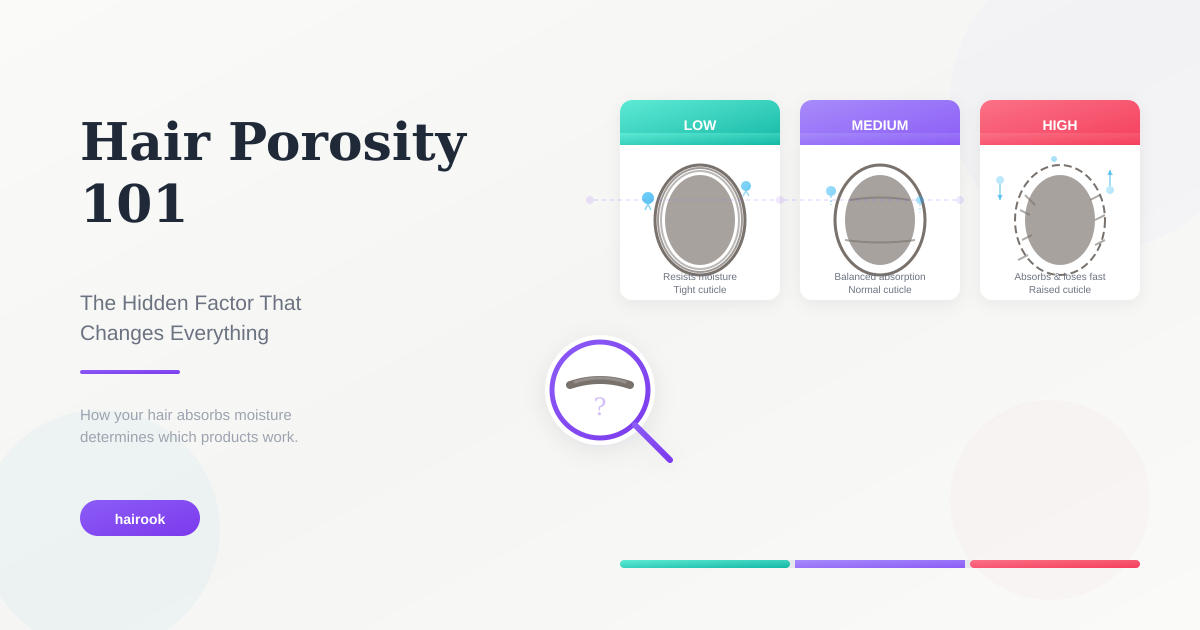
- Porosity — how easily your hair absorbs and holds moisture
- Texture — whether your individual strands are fine, medium, or coarse
- Density — how much hair you have overall
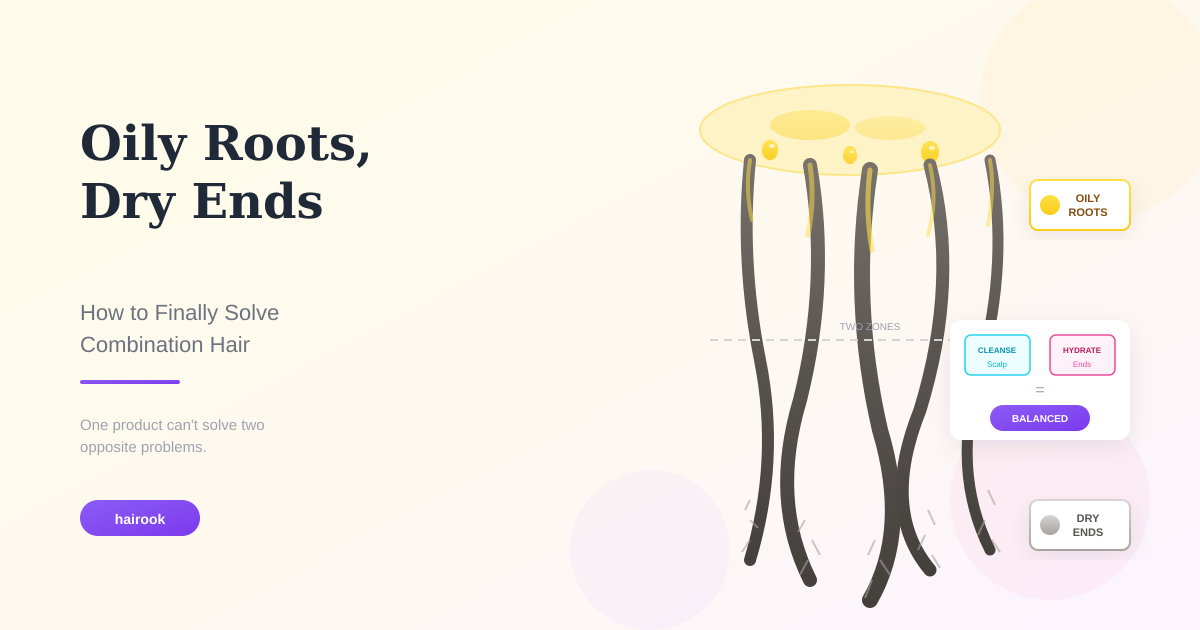
- Scalp type — oily, dry, balanced, or sensitive
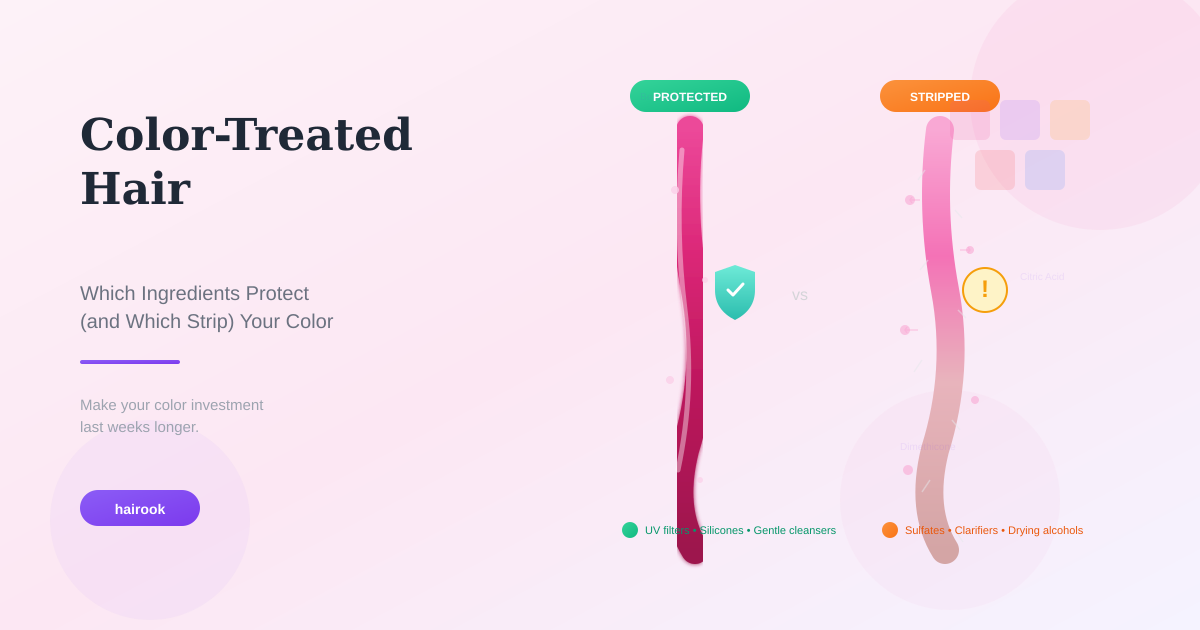
- Current condition — virgin, color-treated, heat-damaged, chemically processed
- Environmental factors — humidity, water hardness, sun exposure
A shampoo that transforms one person's hair can destroy another's using the exact same "clean" ingredients. The difference isn't the product. It's the hair it's touching.
Common Mismatches That Cause Problems
Let's look at specific scenarios where clean products commonly fail.
Mismatch 1: Low-Porosity Hair + Heavy Natural Oils
Clean formulas often rely heavily on natural oils and butters, coconut oil, shea butter, argan oil, olive oil. These are marketed as deeply nourishing.
But low-porosity hair has a tightly sealed cuticle. It resists absorbing anything, including those lovely oils. Instead of penetrating the strand, the oils sit on top, creating a greasy, coated, heavy feel that no amount of washing seems to fix.
The product isn't bad. The hair just can't use it.
Mismatch 2: Fine Hair + Rich Botanical Formulas
Many clean products are formulated with dry, damaged, or curly hair in mind. They're rich, moisturizing, packed with butters and emollients.
Fine hair, which has a smaller strand diameter and less structural strength, gets overwhelmed by these formulas. The result: limp, flat, lifeless hair that looks dirty hours after washing.
Fine-haired people often conclude their hair "hates" natural products. More accurately, their hair hates heavy products and many clean formulas happen to be heavy.
Mismatch 3: Oily Scalp + Gentle Sulfate-Free Cleansers
Sulfates get a bad reputation, and for some people, avoiding them makes sense. But sulfates exist because they're effective at cutting through oil and buildup.
Sulfate-free surfactants are gentler which also means they're less powerful cleansers. For people with oily scalps, this can mean shampoo that never quite gets the scalp clean. Oil accumulates, hair looks greasy, and the more product you apply trying to fix it, the worse it gets.
"Gentle" isn't universally better. For some scalps, it's not enough.
Mismatch 4: Protein-Sensitive Hair + Protein-Heavy Formulas
Hydrolyzed proteins (keratin, wheat, silk, quinoa) are popular in clean hair care. They temporarily strengthen the hair shaft and repair damage.
But not all hair needs protein. Hair that's already protein-balanced or protein-sensitive, responds badly to protein overload. It becomes stiff, brittle, tangly, and prone to breakage. The "strengthening" formula actually makes hair weaker.
Many people don't know they're protein-sensitive until they switch to a clean product loaded with plant proteins and watch their hair deteriorate.
Mismatch 5: High-Porosity Hair + Lightweight Clean Formulas
On the flip side, some clean products are intentionally minimalist, simple, lightweight, free from heavy ingredients.
High-porosity hair (often the result of damage, color-treatment, or natural hair structure) has a raised, open cuticle. It absorbs moisture easily but loses it just as fast. This hair type often needs heavier products to seal moisture in.
A lightweight clean formula may feel lovely on application but leave high-porosity hair dry and frizzy within hours. The product isn't moisturizing enough for what that hair actually needs.
The "Transition Period" Myth: And When It's Actually True
You've probably heard this advice: "Give it time. Your hair needs to adjust."
Sometimes that's true. Sometimes it's terrible advice.
What the Transition Period Actually Is
When you switch from conventional to clean products, a few things happen:
Scalp adjustment. Your scalp may temporarily produce more or less oil as it adapts to different surfactants.
Buildup release. If your previous products contained silicones, those may take several washes to fully remove. During this phase, hair can look dull or feel different.
Sensory adjustment. You're used to how your old products felt. New textures and lather levels take getting used to.
A legitimate transition period typically lasts 2-4 weeks. Some improvement, even if gradual, should be visible during this time.
When "Give It Time" Is Bad Advice
The transition period explanation gets weaponized to keep people using products that genuinely don't work for them. If any of these apply, the product probably isn't a match:
- Your hair is getting progressively worse, not better
- Symptoms are extreme — severe dryness, significant breakage, scalp irritation, major shedding
- It's been more than 4-6 weeks with no improvement
- Your gut says something is wrong
Sometimes there's no transition happening. The product just doesn't fit your hair, and no amount of time will change that.
Persisting with a mismatched product doesn't build tolerance. It builds damage.
Formulation Quality vs. Personal Compatibility
Here's the framework that clears up the confusion.
Two Questions, Not One
When evaluating any hair product, there are actually two separate questions:
Question 1: Is this product well-formulated and gentle? This is about formulation quality. Does it avoid unnecessarily harsh ingredients? Is it made with care? Would it score well on an ingredient analysis?
Question 2: Does this product match what MY hair needs? This is about personal compatibility. Does it align with my porosity, texture, scalp type, and goals? Will it work for my specific situation?
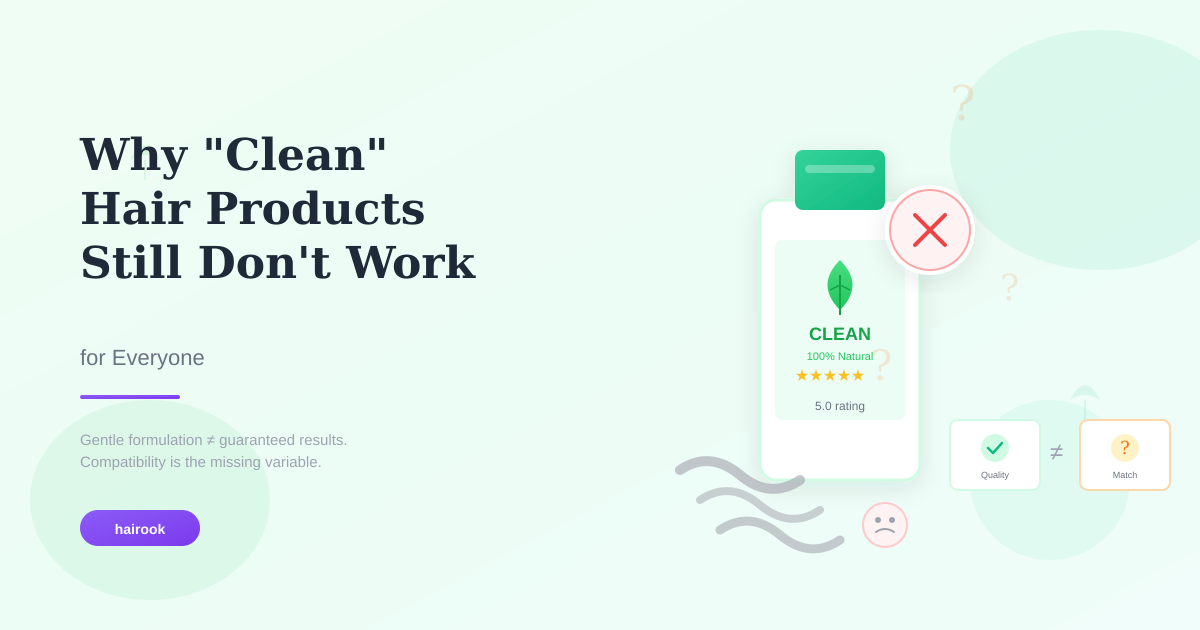
Clean beauty answers Question 1. It says nothing about Question 2.
A product can score perfectly on formulation quality and still be completely incompatible with your hair. Both questions matter, but compatibility determines your actual results.
A 5-Star Product Can Still Be Wrong for You
Imagine a beautifully crafted, certified-clean, highly-rated moisturizing shampoo. Gentle surfactants. Nourishing oils. No questionable ingredients. Five stars across the board.
For dry, high-porosity, coarse hair: This product is a dream. It provides the moisture and weight that hair type craves.
For fine, oily, low-porosity hair: This product is a disaster. It weighs hair down, never fully rinses clean, and leaves an oily residue that styling can't overcome.
Same product. Same ingredients. Same quality rating. Opposite results.
The product isn't good or bad in absolute terms. It's good or bad relative to the hair it's meeting.
Why Universal Ratings Fail
This is why reviews only get you so far.
A five-star rating tells you the product worked for the people who reviewed it. It tells you nothing about whether those people have hair like yours.
The enthusiastic reviewer raving about how the product transformed her thick, dry curls? If you have fine, straight, oily hair, her experience is essentially irrelevant to yours.
Reviews tell you about other people's matches. They can't predict your match.
Finding What Actually Works
So how do you escape the cycle of buying highly-rated products that fail your hair?
Start with Your Hair, Not the Label
Before you evaluate any product, understand what you're working with:
Porosity: Does your hair absorb water quickly (high porosity), resist absorption (low porosity), or fall somewhere in between?
Texture: Are your individual strands fine, medium, or coarse?
Scalp type: Does your scalp tend toward oily, dry, balanced, or easily irritated?
Current condition: Is your hair virgin, color-treated, heat-damaged, or chemically processed?
Goals: Are you seeking volume, moisture, repair, frizz control, color protection?
These factors determine what your hair needs. And what your hair needs determines which products will actually work.
Match Products to Your Profile
Some general patterns:
Oily scalp + fine hair: Needs effective cleansing, lightweight formulas, and products that won't build up. May actually do better with some sulfates.
Dry scalp + coarse hair: Can handle richer products, heavier oils, gentler surfactants. Many clean products suit this profile well.
High-porosity + damaged: Often needs protein to reinforce weakened strands, plus heavier products to seal moisture in.
Low-porosity + healthy: Needs lightweight products that don't coat or build up. Heavy oils and butters are usually a mistake.
These aren't rules, they're starting points. Your specific combination of factors creates your unique profile.
Clean or Conventional: The Label Matters Less Than the Fit
Here's the bottom line:
A "clean" product that matches your hair will outperform a conventional product that doesn't.
A conventional product that matches your hair will outperform a clean product that doesn't.
The variable that matters most isn't the ingredient philosophy. It's the compatibility.
You can absolutely find clean products that work beautifully for you. You can also find conventional products that work beautifully. The key is evaluating fit, not just formulation.
The Bottom Line
"Clean" is a formulation philosophy. It's not a guarantee of results.
If you've tried clean products and they've failed you, that doesn't mean clean beauty is a scam, and it doesn't mean something is wrong with your hair. It means those specific products weren't compatible with your specific profile.
The products that work best are the ones that match your hair regardless of what marketing category they fall into. Understanding your hair's actual needs is more valuable than memorizing ingredient blacklists or chasing "clean" labels.
And if figuring out your hair's needs and matching them to products sounds overwhelming, tools that evaluate compatibility, not just ingredient quality, can help cut through the guesswork. Because the goal isn't finding the "cleanest" product. It's finding the product that actually works for you.