Few hair care ingredients spark more heated debate than silicones.
One camp swears by them – miracle smoothers that transform frizzy, dull hair into sleek, shiny perfection. The other camp warns against them — suffocating coatings that fake healthy hair while secretly causing buildup and damage underneath.
So who's right?
Both. And neither.
The silicone debate is a perfect example of how hair care advice goes wrong when it treats all hair as the same. Silicones aren't inherently good or bad. They're tools, and like any tool, they work brilliantly for some situations and terribly for others.
Here's what silicones actually do, why they're amazing for some hair types and problematic for others, and how to decide whether they belong in your routine.
What Are Silicones, Exactly?
The Basics: Not Plastic, Not Natural, Something In Between
Silicones are synthetic polymers derived primarily from silica (essentially, sand) combined with oxygen and other elements. They're not "plastic" in the way people sometimes claim, but they're not natural either. They exist in a category of their own.
In hair care, silicones work by coating the hair shaft. They don't penetrate into the strand or get absorbed, they sit on the surface, creating a smooth, sealed layer over the cuticle.
This coating is what makes silicones both powerful and controversial.
What Silicones Do to Hair
When applied to hair, silicones:
- Create a smooth surface by filling in gaps and roughness in the cuticle
- Reduce friction between strands, making detangling easier and reducing breakage
- Add shine by creating a reflective surface
- Protect against humidity by sealing the cuticle against moisture infiltration
- Provide slip for heat styling tools, allowing them to glide smoothly
The effects are immediate and visible. Few ingredient categories deliver such obvious, instant cosmetic results.
Common Silicones You'll See on Labels
Not all silicones are the same. Here are the ones you'll encounter most often:
| Silicone Name | Weight | Water-Soluble? | Notes |
|---|---|---|---|
| Dimethicone | Heavy | No | Most common; effective but builds up |
| Cyclomethicone | Light | Evaporates | Minimal buildup; disappears after drying |
| Amodimethicone | Medium | No | Targets damaged areas specifically |
| Dimethicone copolyol | Light-Medium | Yes | Washes out easily |
| PEG-12 Dimethicone | Medium | Yes | Water-soluble variant |
| Phenyl trimethicone | Light | No | High shine, lighter than dimethicone |
Understanding these differences matters more than simply knowing "this product has silicone."
The Case FOR Silicones
Let's start with why silicones became so popular in the first place.
Instant Smoothing and Shine
Nothing else delivers the immediate cosmetic transformation that silicones provide. Within one application, frizzy hair becomes smooth. Dull hair becomes shiny. Rough texture becomes silky.
For people who need their hair to look polished — for work, for an event, for their own confidence, silicones deliver results that other ingredients simply can't match as quickly.
Heat Protection
Silicones form a physical barrier on the hair shaft. This barrier helps buffer against damage from flat irons, curling wands, and blow dryers.
Many heat protectant products rely on silicones as their primary protective mechanism. The coating doesn't eliminate heat damage, but it reduces it, particularly the friction damage that occurs when hot tools move across the strand.
Damage Camouflage
Silicones can't repair structural damage. But they can make damaged hair look and feel dramatically better while you wait for healthy hair to grow in.
By coating the strand and smoothing the lifted, roughened cuticle, silicones temporarily "seal" split ends and mask damage. Your hair isn't healthier, but it's more manageable, shinier, and less prone to further mechanical damage from tangles and friction.
Humidity Defense
For anyone battling frizz in humid climates, silicones are powerful allies.
Frizz often results from moisture in the air entering the hair shaft unevenly, causing strands to swell and lift. Silicones seal the cuticle, creating a barrier that blocks humidity from infiltrating. Your style holds. Your smoothness lasts.
The Case AGAINST Silicones
Now for the other side, because the critics aren't entirely wrong either.
Buildup Is Real
Non-water-soluble silicones don't simply wash away with regular shampoo. They accumulate.
Over time, especially with daily use, layers of silicone build up on the hair shaft. This creates a coating that:
- Makes hair feel heavy, limp, or waxy
- Blocks moisture and conditioning ingredients from penetrating
- Creates dull, lifeless-looking hair despite using "shine" products
- Weighs down fine hair significantly
Buildup is particularly problematic because it happens gradually. Your hair slowly gets worse, and you can't pinpoint why.
The "False Healthy" Effect
Silicones make hair look healthy without actually being healthy.
This sounds like a benefit, and short-term, it is. But long-term, it can mask problems. Hair that desperately needs protein treatments or deep conditioning may seem fine because silicones are covering up the damage.
When people eventually stop using silicones (for whatever reason), they're often shocked by how bad their hair looks. It seems like silicones were "helping" and now their hair is "worse." In reality, the hair was always damaged — the silicones were just hiding it.
Not Great for Every Hair Type
Silicones create a coating. Some hair types handle that coating beautifully. Others don't.
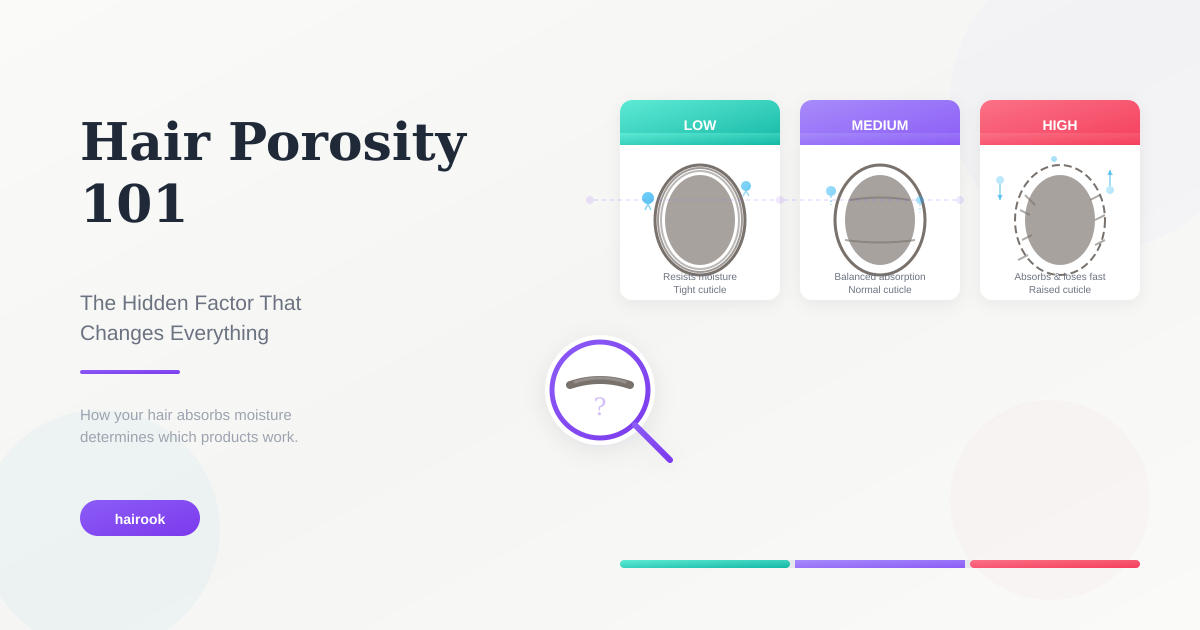
Low-porosity hair already has a tightly sealed cuticle that resists absorption. Adding a silicone coating on top compounds the problem — now nothing can get in. Products stop working. Hair feels perpetually coated.
Fine hair has less structural mass to support heavy coatings. Dimethicone and other heavy silicones can weigh fine strands down, making hair look flat, greasy, and limp.
Some curly hair finds that silicones interfere with curl clumping and moisture absorption, leading to undefined, frizzy, or stringy curls.
Requires Specific Removal
Non-water-soluble silicones don't wash out with gentle, sulfate-free shampoos. You need sulfates or other strong surfactants to fully remove them.
This creates a frustrating dependency cycle: use silicones for smoothing → need sulfates to remove buildup → sulfates dry out hair → need more silicones for smoothing.
For people who prefer gentle, sulfate-free routines, heavy silicone use becomes incompatible with their overall approach.
The Key Distinction: Water-Soluble vs. Non-Water-Soluble
This is the nuance most silicone debates completely miss.
Why This Matters More Than "Silicone vs. No Silicone"
The question isn't simply "does this product contain silicone?" The question is "what kind of silicone, and how does it behave?"
Water-soluble silicones wash out with regular shampoo – even gentle, sulfate-free formulas. They provide smoothing and shine benefits with significantly reduced buildup risk.
Non-water-soluble silicones don't wash out easily. They require clarifying shampoos or sulfates for full removal. These are the ones most associated with buildup problems.
Avoiding all silicones because some cause buildup is like avoiding all oils because some are heavy. The category is too broad for blanket rules.
Water-Soluble Silicones (Lower Buildup Risk)
Look for these if you want silicone benefits without committing to sulfate shampoos:
- Dimethicone copolyol
- PEG-modified silicones (PEG-8 dimethicone, PEG-12 dimethicone, etc.)
- Any silicone with "PEG-" prefix
Also relatively safe: Cyclomethicone — this one evaporates rather than building up, so it provides temporary smoothing without long-term accumulation.
Non-Water-Soluble Silicones (Higher Buildup Risk)
These require stronger cleansing to remove:
- Dimethicone (plain)
- Amodimethicone
- Cetyl dimethicone
- Cetearyl methicone
- Stearyl dimethicone
Not automatically "bad", but if you use products with these regularly, you'll need to clarify periodically to prevent buildup.
Reading Labels with This in Mind
Quick guide for scanning ingredient lists:
- "PEG-" prefix or "-copolyol" suffix = water-soluble, lower buildup risk
- Plain "dimethicone" near the top = heavy silicone, higher buildup potential
- Silicone listed near the end = trace amount, minimal concern regardless of type
- "Cyclomethicone" or "cyclopentasiloxane" = evaporates, minimal buildup
Silicones and Different Hair Types
Here's where it gets personal.
Fine Hair
Fine strands have less structural mass, meaning heavy coatings are proportionally more significant.
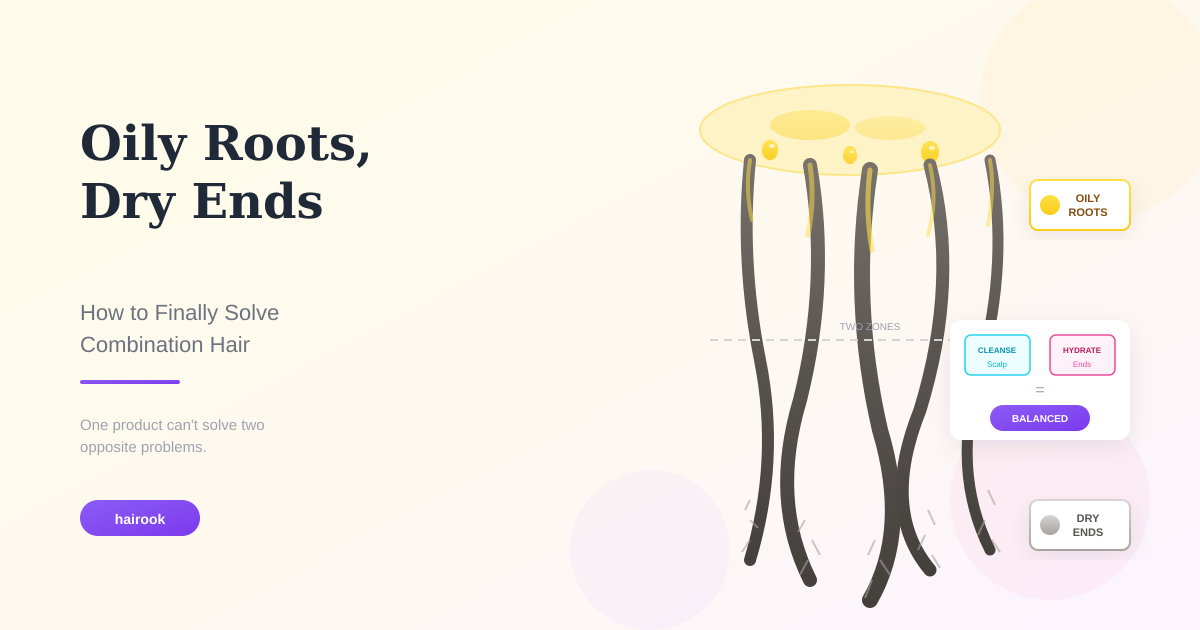
Heavy silicones (dimethicone) often make fine hair look greasy, flat, and limp, even right after washing.
Lightweight or water-soluble silicones (cyclomethicone, dimethicone copolyol) can add shine and smoothness without the weight penalty.
Application tip: If using silicones on fine hair, apply to ends only. Keep them away from roots entirely.
Thick or Coarse Hair
Thicker strands can handle heavier coatings without looking weighed down.
For thick, coarse, or high-density hair, silicones often deliver exactly what's needed: smoothing, frizz control, and manageability. Dimethicone and other heavier silicones work well here.
The main concern is still buildup over time, but thick hair typically tolerates silicones better than fine hair.
Curly and Textured Hair
This is the most debated territory in the silicone conversation.
Some curly hair thrives with silicones — smooth, defined, frizz-free curls that hold their shape beautifully.
Other curly hair struggles — silicones prevent moisture absorption, interfere with curl clumping, and leave curls stringy or undefined.
The difference often comes down to porosity:
- High-porosity curls (often from damage or chemical processing) may benefit from silicones that help seal moisture in
- Low-porosity curls may find silicones compound their absorption problems
There's no universal answer for curly hair. You have to experiment, or understand your porosity first.
Low-Porosity Hair
Low-porosity hair already has a tightly sealed cuticle. Adding silicones creates another layer on top of an already-resistant surface.
Result: products don't penetrate, moisture can't get in, hair feels perpetually coated and product-heavy.
If you have low-porosity hair and choose to use silicones, stick to water-soluble options and clarify regularly. Many low-porosity people find silicone-free routines work better overall.
High-Porosity Hair
High-porosity hair has the opposite problem — a raised, damaged cuticle that lets moisture in but can't keep it there.
Silicones can actually help here. The coating helps seal moisture in that would otherwise escape quickly. Amodimethicone specifically targets damaged, high-porosity areas.
If your hair is high-porosity from damage or processing, silicones might be genuinely beneficial, not just cosmetically, but functionally.
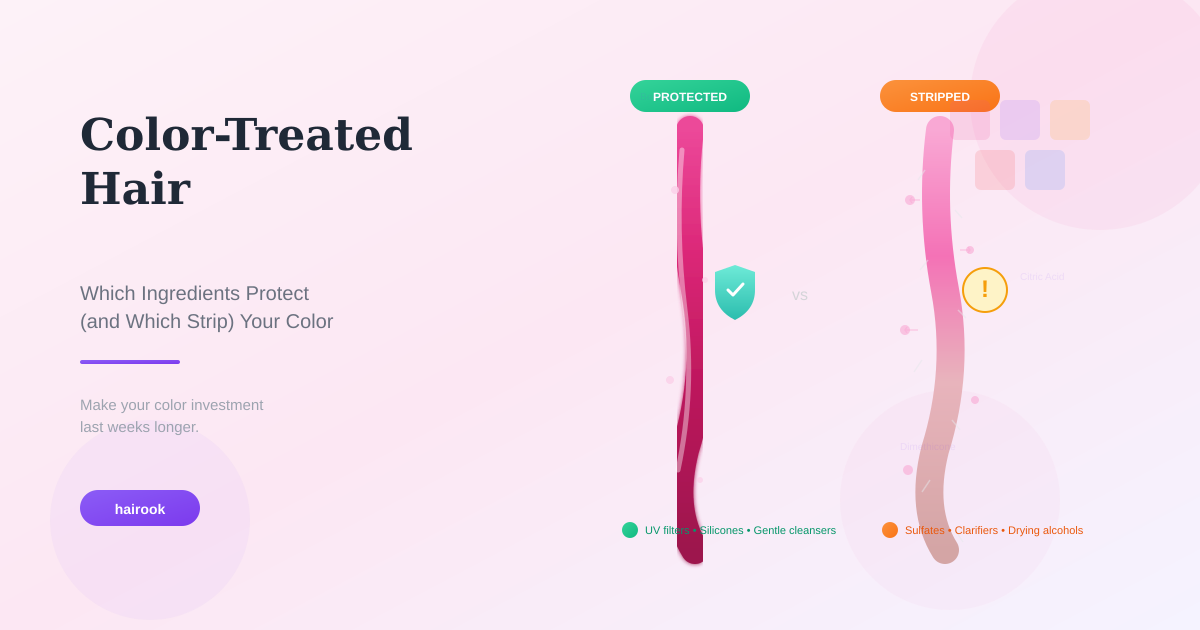
Color-Treated Hair
Silicones offer some benefits for color-treated hair:
- Sealing the cuticle can slow color fade
- The protective coating shields against some environmental damage
- Smoothing damaged, color-processed hair improves appearance
However, buildup can make color look dull over time. Balance is key. Use silicones strategically, clarify when needed, and don't let buildup accumulate.
How to Manage Silicone Buildup
If you use silicones, especially non-water-soluble ones, buildup management becomes part of your routine.
Signs You Have Silicone Buildup
- Hair feels coated or waxy even right after washing
- Products don't seem to absorb or work anymore
- Hair looks dull despite using shine-enhancing products
- Limp, heavy feeling at roots
- Curls won't clump or form properly
- Hair dries faster than usual (paradoxically, the coating prevents water absorption)
How to Remove Buildup
Clarifying shampoo is the standard solution. These contain sulfates or other strong surfactants that cut through silicone buildup effectively.
One clarifying wash is usually enough to reset. You don't need to strip your hair repeatedly.
Frequency depends on your silicone usage:
| Usage Pattern | Clarifying Frequency |
|---|---|
| Daily non-water-soluble silicones | Weekly |
| Few times per week | Every 2 weeks |
| Occasional use or water-soluble only | Monthly |
Preventing Buildup in the First Place
- Choose water-soluble silicones when possible
- Use silicone-heavy products sparingly, not necessarily every wash
- Build regular clarifying into your routine if using non-water-soluble silicones
- Rotate products — you don't need silicones in every product you use
Making the Decision: Should YOU Use Silicones?
Silicones Might Work Well If You:
- Have frizz-prone hair and need humidity protection
- Use heat styling tools regularly and want protection
- Have high-porosity or damaged hair that needs help sealing in moisture
- Want instant cosmetic improvement (shine, smoothness, manageability)
- Have thick or coarse hair that can handle the weight
- Are willing to clarify regularly to manage buildup
You Might Want to Avoid (or Minimize) Silicones If You:
- Have fine hair that gets weighed down easily
- Have low-porosity hair that already struggles with product absorption
- Prefer to avoid sulfate shampoos (needed to remove non-water-soluble silicone buildup)
- Notice your hair feels coated or products have stopped working
- Have curls that lose definition with silicone products
- Want a simpler routine without buildup management
The Middle Path
You don't have to go all-in or completely silicone-free. Consider:
- Using water-soluble silicones for benefits with less buildup risk
- Using silicone products strategically — for styling, heat protection, or special occasions, rather than in every product
- Building clarifying into your routine (once or twice monthly) if you use any non-water-soluble silicones
- Paying attention to how YOUR hair responds rather than following blanket rules
The Bottom Line
Silicones aren't villains. They're not heroes either. They're ingredients with real benefits and real drawbacks, depending on who's using them.
The polarized debate that frames silicones as universally "bad" or universally "fine" misses the point entirely. The right question isn't "are silicones good or bad?" It's "are silicones right for MY hair?"
That depends on your porosity, your texture, your styling habits, and your willingness to manage buildup. For some hair, silicones are genuinely helpful. For others, they cause more problems than they solve.
Understanding your hair's specific profile, not following ingredient blacklists or blanket advice, is what leads to products that actually work. And if navigating ingredient decisions like this feels overwhelming, tools that match products to your individual hair profile can help you filter through the noise and find what fits.