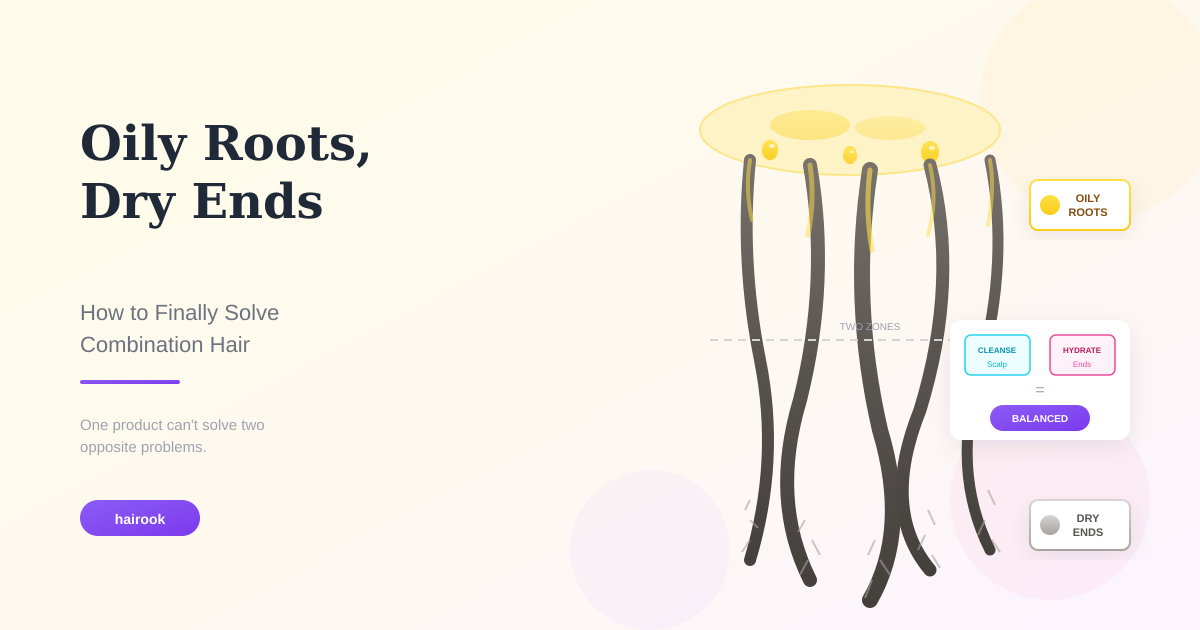
Your scalp is greasy by day two. Your ends feel like straw. You wash your hair and somehow manage to make both problems worse: roots still oily by evening, ends even drier than before.
Every product choice feels like a compromise. Shampoos strong enough to cut the oil leave your ends crispy. Conditioners rich enough to help your ends turn your roots into an oil slick. You've tried "balancing" formulas that promise to solve both. They solve neither.
If this sounds familiar, you have combination hair. And you're not alone, it's one of the most common hair frustrations out there.
Here's the good news: combination hair isn't a permanent curse. It's a solvable puzzle. The solution isn't finding one magical product that does everything. It's understanding that your scalp and your ends are two completely different environments, and treating them that way.
Why Does This Happen? Understanding the Oily Roots, Dry Ends Paradox
Your Scalp and Your Ends Are Completely Different Environments
This is the key insight most people miss: the hair at your roots and the hair at your ends are living in entirely different worlds.
Your scalp is living skin. It produces sebum (oil), has its own microbiome, responds to hormones, and reacts to what you put on it. It can overproduce or underproduce oil based on dozens of factors.
Your ends are dead keratin. They can't produce anything. They're the oldest part of your hair — the strands that have been around longest, weathered the most damage, and lost the most of their original protective coating. They can only receive moisture and protection, never generate it.
These two zones have opposite needs. And that's not a problem with your hair, it's just biology.
Common Causes of the Imbalance
Understanding why combination hair develops helps you fix it.
Cause 1: Overwashing
This is the most common culprit.
When you wash your hair frequently, especially with strong cleansers, you strip away sebum from your scalp. Your scalp responds by producing more oil to compensate. So you wash again. More oil. Wash again. The cycle escalates.
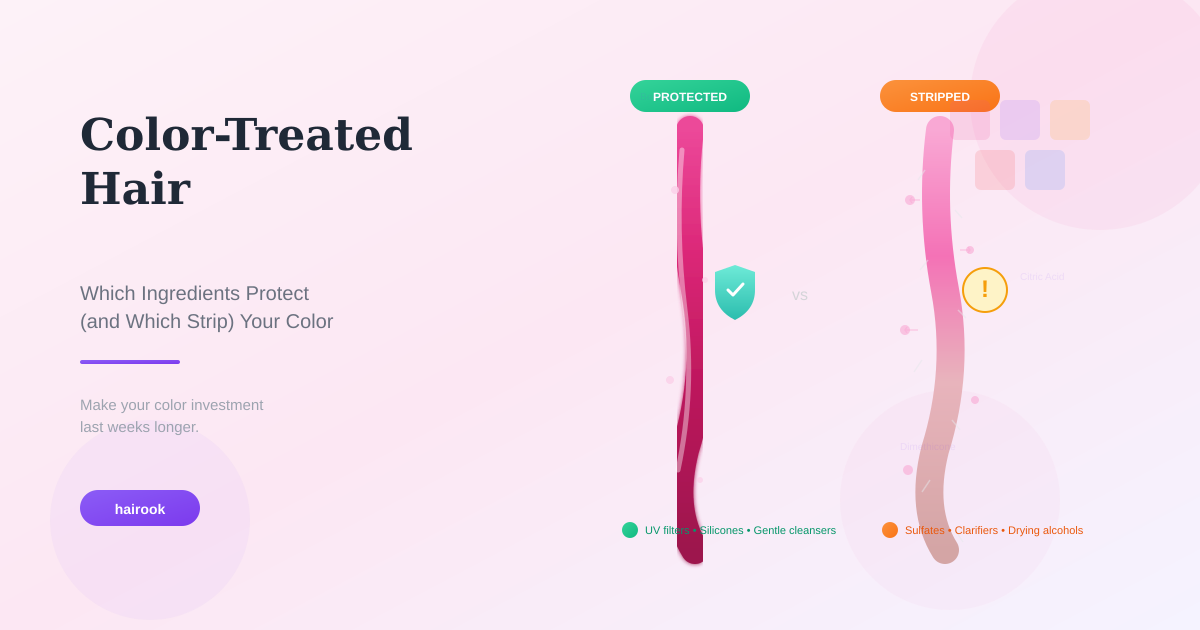
Meanwhile, every wash exposes your ends to surfactants that strip away what little moisture they have. They get progressively drier while your scalp gets progressively oilier.
The result: a vicious cycle where the "solution" (washing) is actually making both problems worse.
Cause 2: Damage to the Ends
Your ends are old. If your hair is shoulder length, those ends are 2-3 years old. If it's longer, they could be 4, 5, even 6 years old.
During that time, they've been exposed to:
- Heat styling
- Chemical processing (color, bleach, relaxers)
- Sun exposure
- Friction from pillowcases, hats, scarves
- Environmental factors (hard water, chlorine, pollution)
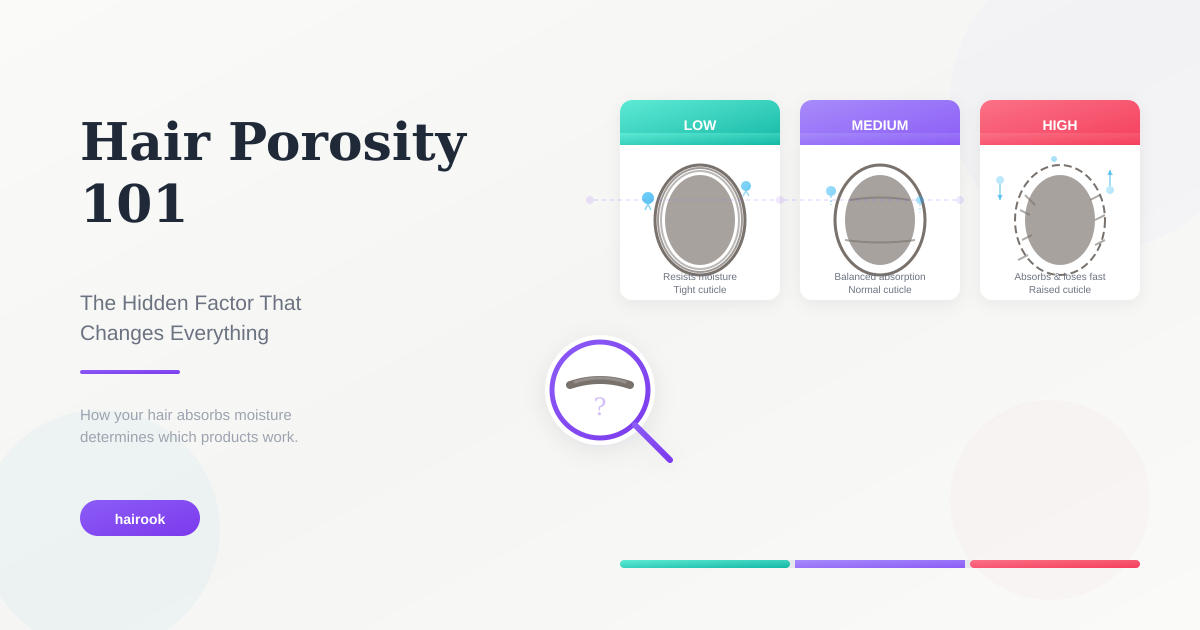
Each exposure degrades the protective cuticle layer a little more. Damaged cuticles can't hold moisture. So your ends get progressively drier, regardless of what your scalp is doing.
Cause 3: Product Misapplication
Sometimes the problem is technique, not products.
Applying conditioner to your scalp adds moisture and weight where you don't need it — making roots look greasy faster. Applying clarifying shampoo to your ends strips them of moisture they desperately need.
Using one product from root to tip, when each zone needs different care, creates a lose-lose situation.
Cause 4: Natural Sebum Distribution Issues
Sebum is produced at the scalp, but it's meant to travel down the hair shaft, naturally conditioning and protecting as it goes.
For some hair types, this doesn't happen effectively:
- Straight, fine hair: Sebum travels easily, sometimes too easily, making hair look greasy quickly
- Curly or textured hair: Sebum has trouble navigating curves and coils — scalp stays oily while ends stay dry
- Long hair: Sebum simply can't travel far enough to reach the ends
This isn't a flaw. It's just physics.
Why "Balancing" Shampoos Usually Disappoint
You've probably seen products marketed for "combination hair" or promising to "balance" oil and moisture. Most disappoint.
Here's why: they're trying to solve two opposite problems with one formula. That usually means compromising on both.
A formula gentle enough for dry ends often doesn't cleanse an oily scalp effectively. A formula strong enough for oily roots often strips dry ends further.
True balance usually requires treating each zone differently, not finding a middle-ground product that does both jobs poorly.
The Two-Zone Approach: Treating Scalp and Ends Separately
The mindset shift that fixes combination hair is simple: stop treating your hair as one thing.
Instead, think of it as two zones with different needs and different routines.
Zone 1: The Scalp
Goal: Clean effectively without triggering overproduction.
Your scalp is where cleansing matters. Oil, sweat, product buildup, and dead skin cells accumulate here. This is where shampoo should focus.
When washing, concentrate shampoo at the roots. Massage into the scalp. Let the lather rinse through the lengths as you rinse. That's sufficient cleansing for your strands.
If your scalp has specific concerns (excess oil, flaking, buildup), consider scalp-targeted treatments as an additional step.
Zone 2: The Lengths and Ends
Goal: Hydrate, protect, and seal without weighing anything down.
Your mid-lengths and ends need moisture and protection, not cleansing. This is where conditioner, masks, and treatments should focus.
Apply conditioner from mid-shaft down. Concentrate on the ends. Avoid the scalp entirely unless you have a genuinely dry scalp (a different issue).
Protect ends from further damage with leave-ins, oils, or serums applied after washing.
The Key Mindset Shift
Instead of "hair care" as one unified routine, think of it as:
- Scalp care: Cleansing, oil management, scalp health
- Strand care: Moisture, protection, damage prevention
Different products. Different application zones. Sometimes even different wash frequencies (some people shampoo their scalp more often than they deep-condition their ends).
This sounds more complicated than using one product everywhere. In practice, it's actually simpler, because your products start working instead of fighting each other.
Building Your Combination Hair Routine
Here's a practical framework.
Shampoo Strategy
Where: Scalp only.
How: Apply shampoo directly to your scalp. Massage with fingertips (not nails) to lift oil and buildup. Focus entirely on the roots.
When you rinse, the shampoo will run through your lengths. That passive cleansing is enough for your strands. They don't need direct scrubbing.
What to choose: Pick shampoo based on your scalp's needs, not your ends' needs. If your scalp is oily, you can use a clarifying or balancing shampoo without worrying about drying your ends, because the shampoo isn't really touching your ends.
Conditioner Strategy
Where: Mid-lengths to ends only.
How: After shampooing, squeeze excess water from your lengths. Apply conditioner from about ear-level down. Concentrate on the ends. Avoid the scalp completely.
Let it sit for a minute or two. Rinse with cool or lukewarm water (cool helps seal the cuticle).
What to choose: Pick conditioner based on your ends' needs. If they're dry and damaged, use something rich and hydrating. Your scalp won't get greasy because the conditioner never touches it.
How Often to Wash
There's no universal "correct" frequency. It depends on your scalp's oil production, your activity level, and your hair type.
If you currently wash daily and have oily roots: Try extending to every other day. Your scalp may be overproducing oil because you've trained it to. It can take 2-4 weeks to recalibrate.
If your scalp is genuinely very oily: Wash when you need to. Some people legitimately need daily washing, and forcing yourself to go longer won't fix the underlying oil production.
The key is finding your personal rhythm, not following arbitrary rules.
Weekly Treatments
For the scalp: Consider a clarifying shampoo or scalp scrub once every 1-2 weeks to remove buildup that regular shampooing misses.
For the ends: A deep conditioning mask or pre-wash oil treatment once a week gives dry ends intensive moisture they can't get from regular conditioner.
Keep these treatments zone-specific. Clarifying treatment on scalp. Hydrating treatment on ends.
Styling Considerations
At the roots: Dry shampoo between washes absorbs oil and extends your style. Apply only where needed — at the roots, not through the lengths.
At the ends: A leave-in conditioner, serum, or light oil adds a protective layer and helps seal in moisture. Apply to damp ends after washing, or to dry ends as needed.
Avoid applying heavy styling products to your scalp unless they're specifically designed for scalp use.
Products That Actually Help (And What to Look For)
For the Scalp
Look for:
- Effective but not overly harsh surfactants
- Lightweight formulas that rinse clean
- Clarifying ingredients if buildup is an issue (salicylic acid, zinc)
- Scalp-soothing ingredients if irritation accompanies the oil
Avoid:
- Heavy conditioning agents near the top of the ingredient list (these belong on your ends, not your scalp)
For the Ends
Look for:
- Rich, creamy conditioners
- Hydrating ingredients: glycerin, aloe vera, natural oils, fatty alcohols
- Protein for damaged ends: keratin, silk amino acids, wheat protein
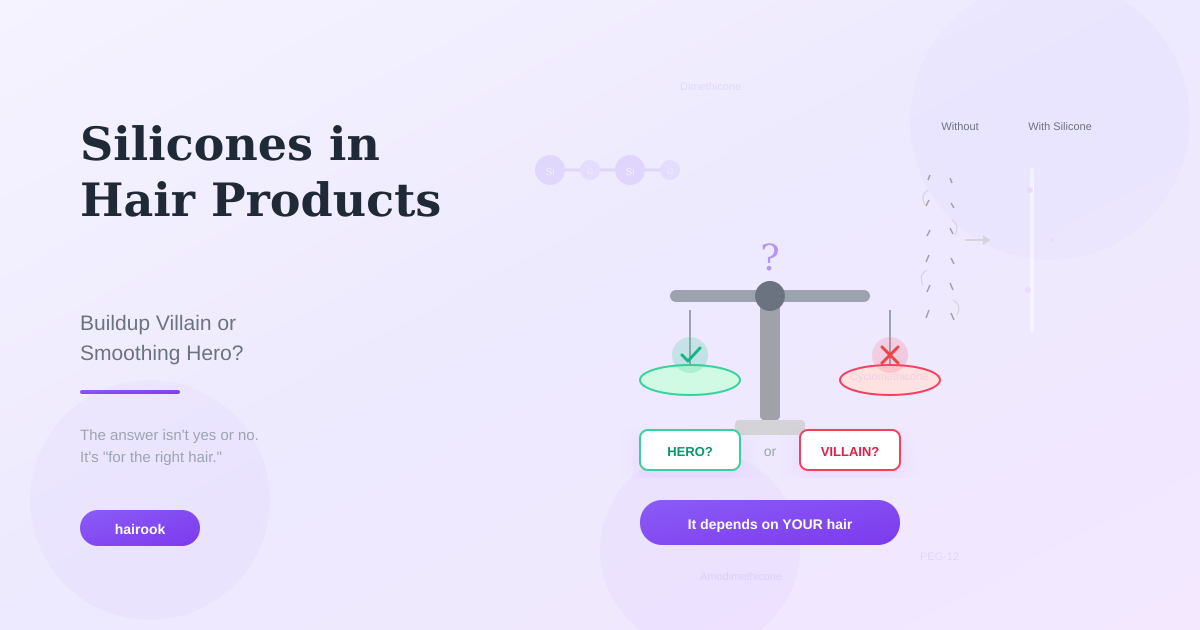
- Sealing ingredients: oils, butters, or silicones to lock moisture in
Avoid:
- Applying these products to your scalp
Why Labels Like "For Oily Hair" and "For Dry Hair" Both Miss the Point
Products labeled "for oily hair" are formulated assuming your entire head is oily. They're often too stripping for dry ends.
Products labeled "for dry hair" are formulated assuming your entire head is dry. They're often too heavy for an oily scalp.
The solution isn't choosing one label. It's selecting different products for different zones, or at minimum, applying products strategically regardless of what the bottle says.
Common Mistakes That Make Combination Hair Worse
Mistake 1: Washing More to Control Oil
It feels logical. Hair is oily, so wash it. But frequent washing often triggers more oil production while drying ends further.
If you're washing daily and still struggling with oil, the solution might be washing less, giving your scalp time to recalibrate.
Mistake 2: Skipping Conditioner to Avoid Greasiness
Conditioner doesn't make your scalp greasy if you don't put it on your scalp.
Skipping conditioner to avoid oiliness punishes your ends for your scalp's behavior. Apply conditioner to ends only, and you get the moisture benefits without the scalp issues.
Mistake 3: Applying Products Root to Tip
Different zones need different products. Applying everything from root to tip ignores this reality.
Shampoo goes on scalp. Conditioner goes on ends. Treatments go where they're needed. This simple separation solves most combination hair problems.
Mistake 4: Relying Entirely on Dry Shampoo
Dry shampoo is useful for absorbing oil between washes. It's not a substitute for actually washing.
Overusing dry shampoo creates buildup on the scalp, which can worsen oil production and cause scalp issues. Use it as a bridge, not a replacement.
Mistake 5: Ignoring Damage as a Contributing Factor
Sometimes ends are dry because they're damaged, not because of your routine.
If your ends are severely compromised: split, gummy, constantly tangled — no product will restore them. Sometimes a trim is the most effective treatment.
When to Consider a Trim
The Hard Truth About Damaged Ends
Products can temporarily improve the appearance of damaged ends. They can smooth the cuticle, add shine, reduce friction.
But they can't repair structural damage. Truly damaged ends: split, porous, broken — cannot be restored to health. They can only be managed or removed.
Signs Your Ends Need More Than Products
- Split ends that travel up the shaft when left untrimmed
- Ends that feel gummy or mushy when wet
- Extreme tangling that no conditioner resolves
- Visible breakage and single-strand knots
- Ends that look thin and see-through compared to your roots
Maintenance Trims
You don't have to chop off inches. Regular small trims, even half an inch every 8-12 weeks, prevent damage from traveling up the hair shaft.
Healthy ends require less intensive treatment. A trim might actually simplify your routine.
The Bottom Line
Oily roots and dry ends isn't a contradiction your hair is creating to frustrate you. It's two different zones with two different needs existing on the same head.
The fix isn't finding one perfect "balancing" product. It's treating each zone appropriately:
- Scalp gets cleansing. Focus shampoo here. Manage oil production. Keep it clean without stripping.
- Ends get moisture. Focus conditioner and treatments here. Hydrate. Protect. Seal.
When you stop forcing your whole head to accept one compromise product and start addressing each zone's actual needs, combination hair stops being a daily battle.
And if identifying the right products for your specific scalp type and hair condition feels overwhelming, tools that evaluate products based on your individual profile can help you find targeted solutions for each zone, rather than settling for one-size-fits-all formulas that fit neither.