You didn't change your shampoo. You didn't change your routine. But somewhere along the way, your hair changed.
It feels coated. Dull. Straw-like at the ends but weirdly heavy at the roots. Products that worked for years suddenly do nothing. Your color fades faster. Your scalp feels tight after every wash.
If this sounds familiar, especially if it started after moving to a new city, there's a good chance the problem isn't your hair or your products. It's your water.
Hard water affects millions of households, and most people have no idea it's sabotaging their hair care routine. Here's what's actually happening, how to confirm it's your issue, and what to do about it.
What Is Hard Water, Exactly?
The Mineral Content Difference
All tap water contains dissolved minerals. The question is how much.
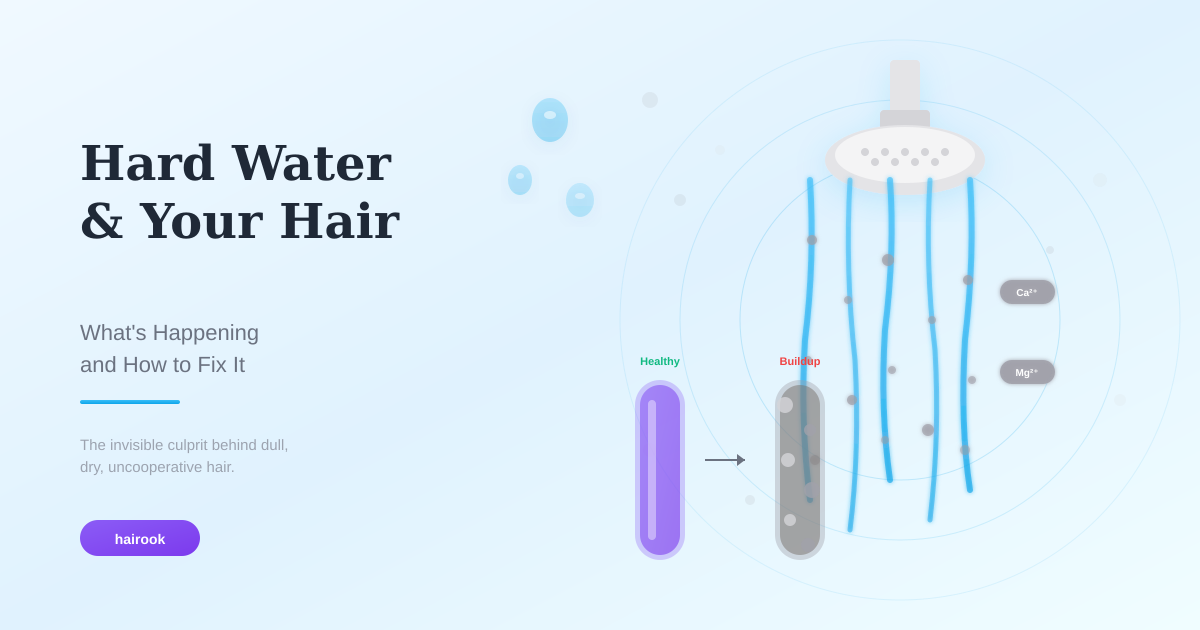
Hard water has a high concentration of dissolved calcium and magnesium, picked up as water travels through limestone, chalk, and other mineral-rich rock formations before reaching your tap.
Water hardness is typically measured in parts per million (PPM) or grains per gallon:
| Classification | PPM Range | What It Means |
|---|---|---|
| Soft | 0 – 60 | Low mineral content |
| Moderately Hard | 61 – 120 | Noticeable but manageable |
| Hard | 121 – 180 | Significant mineral presence |
| Very Hard | 180+ | High mineral concentration |
You can usually find your local water hardness through your municipal water supplier's annual report, or by using an inexpensive home test kit.
Why Your Water Might Have Changed
Hard water issues often appear suddenly. Common triggers:
Relocation. Different regions have dramatically different water profiles. Moving from Seattle (soft water) to Phoenix (very hard water) can transform your hair within weeks.
Seasonal shifts. Some municipalities switch water sources seasonally, which can change mineral content.
Well water. Private wells often have higher and more variable mineral content than treated municipal water.
If your hair problems started around any of these changes, water is a prime suspect.
What Hard Water Actually Does to Your Hair
Mineral Buildup: The Invisible Coating
Here's what's happening at the strand level.
Every time you wash your hair in hard water, trace amounts of calcium and magnesium are deposited on the hair shaft. Individually, these deposits are microscopic. Over weeks and months, they accumulate into a film that coats each strand.
This mineral film creates a barrier. Moisture can't get in. Conditioning ingredients can't penetrate. Your hair becomes progressively drier and more brittle, not because it lacks hydration, but because hydration can't reach it.
You're moisturizing a wall.
The Cuticle Problem
Healthy hair has a smooth, flat cuticle layer – the shingle-like outer coating that protects the strand and reflects light (creating shine).
Hard water minerals disrupt this. Calcium deposits can wedge under cuticle scales, lifting and roughening them. The result:
- Dullness — rough cuticles scatter light instead of reflecting it
- Tangles — raised cuticles catch on each other
- Frizz — lifted cuticles allow moisture to enter and exit unpredictably
- Rough texture — hair feels coarse even if it's naturally fine
Why Your Products Stop Working
Ever notice that shampoo barely lathers in hard water?
That's not your imagination. Calcium and magnesium react with surfactants (the cleansing agents in shampoo), forming a soap scum that reduces lather and cleaning effectiveness.
But the bigger issue is what happens after cleansing.
Your conditioner, hair mask, or leave-in treatment can't do its job when there's a mineral barrier in the way. The product sits on top of the buildup instead of absorbing into the strand. You use more product, thinking your hair is extra thirsty, but the problem isn't quantity. It's access.
The product isn't failing. The water is blocking it.
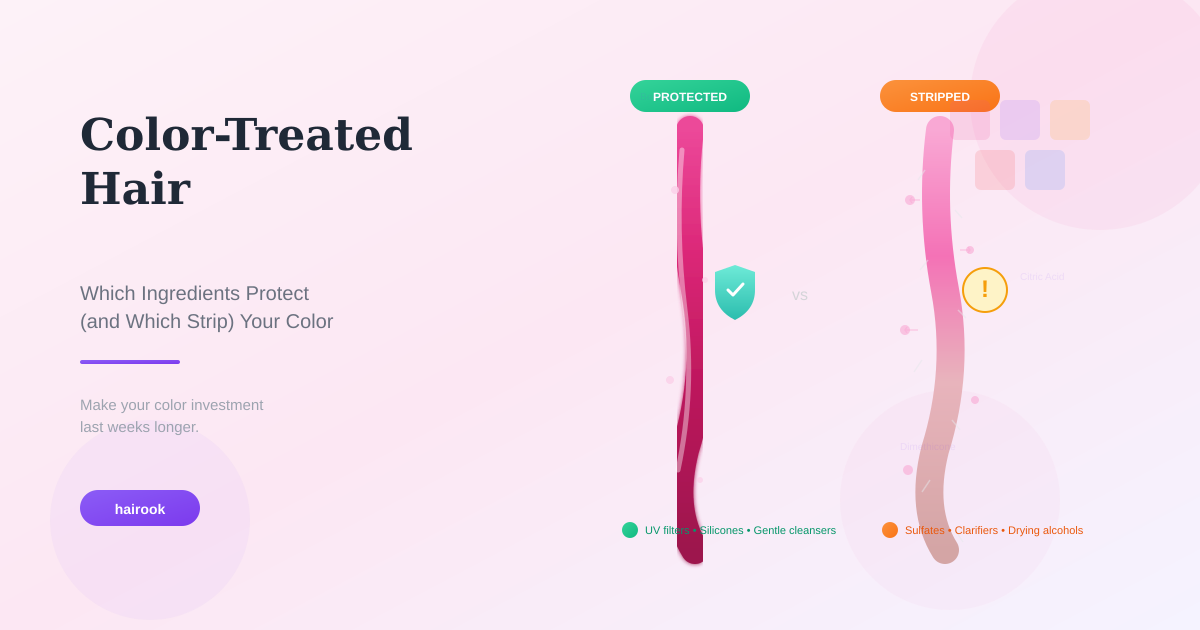
Color-Treated Hair and Hard Water
If you color your hair, hard water is especially problematic.
Mineral deposits, particularly iron and copper sometimes present in hard water, accelerate oxidation of color molecules. This means:
- Blondes develop brassiness faster
- Brunettes lose vibrancy and look muddy
- Reds fade more quickly
- All colors appear dull and flat
That expensive salon color job? Hard water can cut its lifespan significantly.
Signs Your Hair Is Affected by Hard Water
Not sure if hard water is your issue? Look for these patterns.
The Symptom Checklist
- Hair feels coated, stiff, or waxy even immediately after washing
- Persistent dullness that no shine serum or gloss treatment fixes
- Increased tangles and difficulty detangling, especially when wet
- Dry, brittle ends despite regular deep conditioning
- Limp roots: hair lacks volume and feels heavy
- Color fading faster than your stylist said it would
- Scalp tightness or itchiness after washing (mineral residue on scalp)
- Products don't lather the way they used to
The Relocation Test
Ask yourself:
- Did these symptoms start after moving to a new home or city?
- When you travel somewhere else, does your hair feel noticeably different (better)?
- Did your hair behave differently before, in a previous home?
If you answered yes to any of these, hard water is very likely contributing.
How to Fix Hard Water Hair Damage
The good news: hard water damage is reversible. The approach depends on your severity level and budget.
Tier 1: Clarifying and Chelating Treatments
This is where most people should start.
Clarifying shampoo is a deep-cleaning formula designed to strip away buildup. It's effective for product residue, oils, and some surface mineral deposits. Good for maintenance, but not specifically formulated for minerals.
Chelating shampoo is the targeted solution. Chelating agents (like EDTA, phytic acid, or citric acid) chemically bind to mineral deposits and lift them off the hair shaft. This is what actually removes calcium and magnesium buildup.
Key difference: Clarifying removes product buildup. Chelating removes mineral buildup. For hard water issues, chelating is more effective.
Usage guidance:
- Hard water areas: Chelating treatment 1-2x per month
- Very hard water: Up to weekly initially, then reduce to maintenance
- Always follow with a hydrating conditioner — chelating leaves hair stripped and vulnerable
Tier 2: DIY Rinses (Budget-Friendly Option)
If you want a gentler or more affordable approach, acidic rinses can help dissolve mineral deposits.
Apple cider vinegar rinse:
- Mix 1-2 tablespoons ACV with 1 cup of water
- Apply to hair after shampooing
- Let sit for 1-2 minutes
- Rinse thoroughly
The mild acidity helps break down mineral buildup and smooth the cuticle. It's not as powerful as chelating shampoo, but useful for light buildup or between chelating treatments.
Limitation: DIY rinses work for maintenance. They won't reverse heavy, long-term mineral accumulation.
Tier 3: Shower Filters
Rather than removing buildup after it happens, shower filters reduce minerals before water touches your hair.
These attach directly to your showerhead and use filtration media (commonly KDF, activated carbon, or vitamin C) to reduce mineral content, chlorine, and other impurities.
Effectiveness varies. Shower filters can reduce hardness, but they won't turn very hard water into soft water. Think of them as harm reduction, not elimination.
Practical notes:
- Look for filters specifically rated for hard water minerals
- Replace cartridges as recommended (usually every 2-6 months)
- Expect modest improvement, not miracles
Tier 4: Whole-House Water Softeners
The most comprehensive (and expensive) solution.
Water softeners use ion exchange to remove calcium and magnesium from your entire water supply, before it reaches any tap or showerhead. This addresses the problem at the source.
Benefits: Most effective solution. Helps hair, skin, appliances, and plumbing.
Drawbacks: Significant upfront cost. Installation required. Ongoing salt/maintenance costs.
Worth considering if: You own your home, have very hard water, and notice issues beyond just hair (dry skin, spotty dishes, scale buildup on fixtures).
Common Mistakes When Treating Hard Water Hair
Over-Clarifying
Chelating shampoos are powerful. That's the point. But using them too frequently strips away natural oils along with minerals, leaving hair dry and damaged.
Guideline: Once or twice a month is usually sufficient. Only increase frequency if you have extremely hard water and see ongoing buildup.
Skipping the Follow-Up
After chelating, your hair is essentially "naked", the mineral barrier is gone, but so is any protective coating. This is the moment your hair is most porous and vulnerable.
Always follow chelating treatments with a rich conditioner or hydrating mask. This is when deep conditioning actually works, because there's no barrier blocking absorption.
Expecting Instant Transformation
If you've been washing in hard water for months or years, buildup didn't happen overnight. It won't disappear overnight either.
You may need 2-3 chelating sessions before you see full results. Some people notice improvement immediately; others need consistent treatment over several weeks.
Be patient. The damage is reversible, it just takes time.
Choosing the Right Products for Hard Water Areas
What to Look For
When shopping for hard water solutions, check ingredient lists for:
- Chelating agents: EDTA (disodium EDTA), phytic acid, citric acid
- Gentle but effective surfactants that perform in hard water
- Cuticle-smoothing ingredients for post-treatment repair
What to Use Carefully
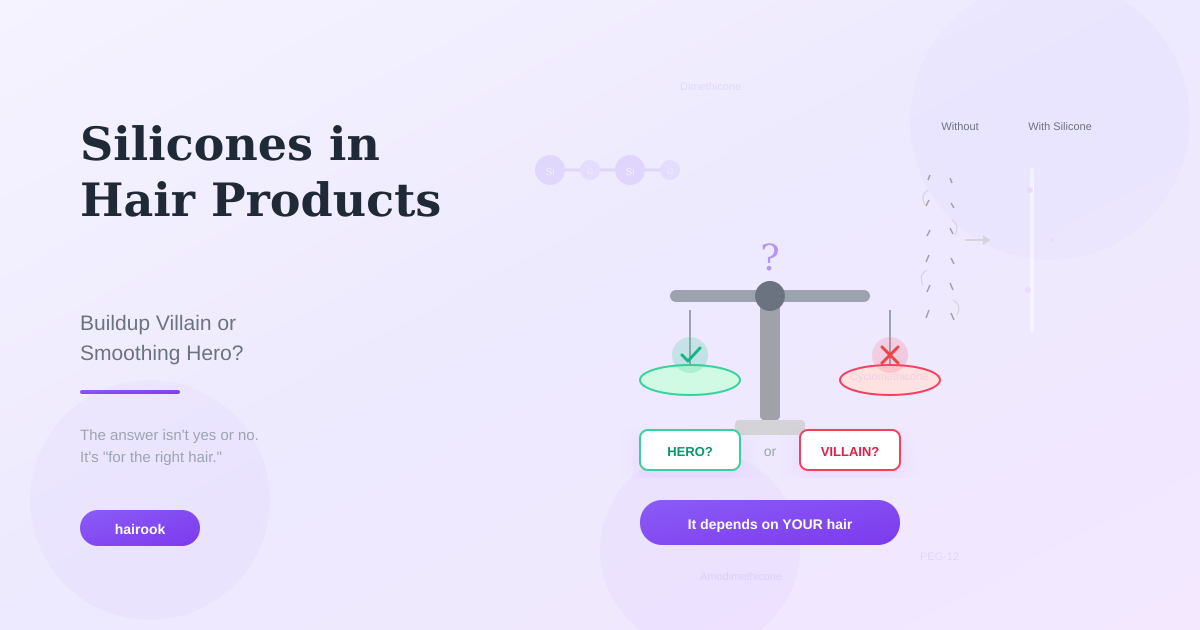
Heavy silicones can complicate hard water issues. They coat the hair shaft, which sounds protective, but can actually trap mineral deposits underneath, making them harder to remove.
If you're in a hard water area, consider water-soluble silicones or silicone-free formulas that won't create additional layering issues.
Why Your Hair Profile Still Matters
Here's where it gets personal.
A chelating shampoo that works beautifully for someone with fine, oily hair might be far too stripping for someone with coarse, dry curls. Hard water is the problem, but the solution still needs to match your individual hair characteristics.
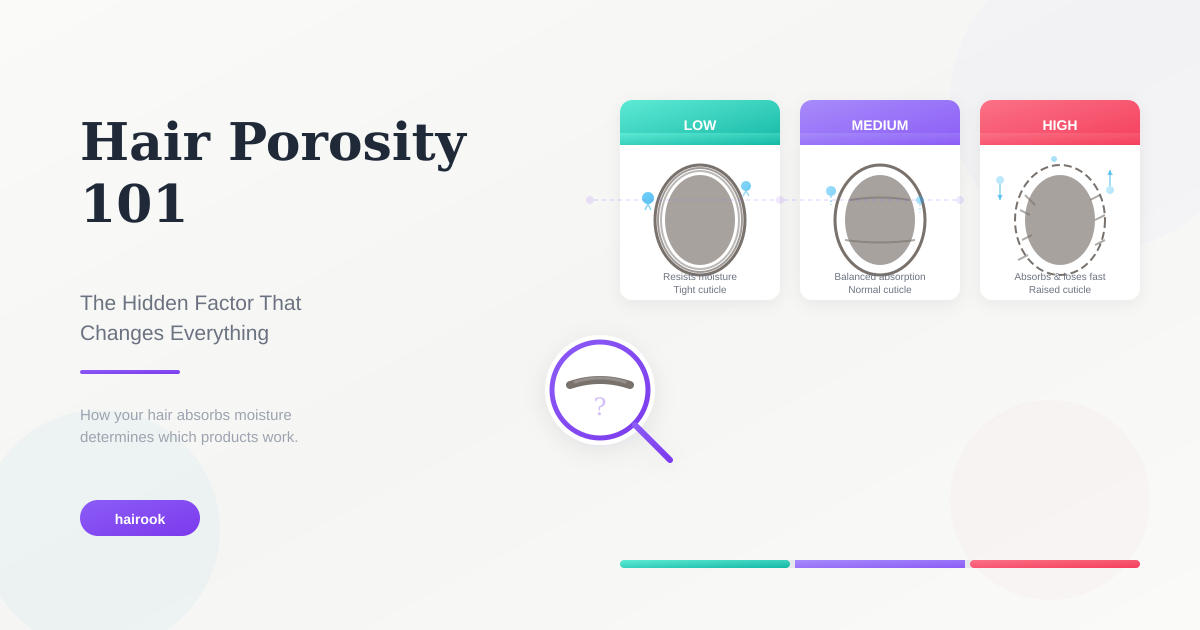
Porosity, texture, and current condition all affect how your hair responds to chelating treatments. Someone with high-porosity hair may need extra conditioning after treatment. Someone with fine hair may need a gentler chelating formula to avoid over-stripping.
The water is universal. The solution isn't.
The Bottom Line
Hard water is one of those invisible factors that can derail an otherwise perfect hair care routine. You can use the best products, follow all the right steps, and still end up with dull, dry, uncooperative hair, simply because of what's coming out of your showerhead.
The fix isn't complicated once you understand what's happening:
- Confirm it's hard water (test your water or notice relocation patterns)
- Start with chelating treatments to remove existing buildup
- Follow with deep conditioning while hair is receptive
- Consider filters or softeners if the problem is severe or ongoing
- Match solutions to your hair type: what works for others may not work for you
If you're unsure which products will perform in your water conditions, tools that factor in your location and water hardness when matching products to your profile can eliminate a lot of guesswork.
Because sometimes the problem isn't your routine. It's everything around it.