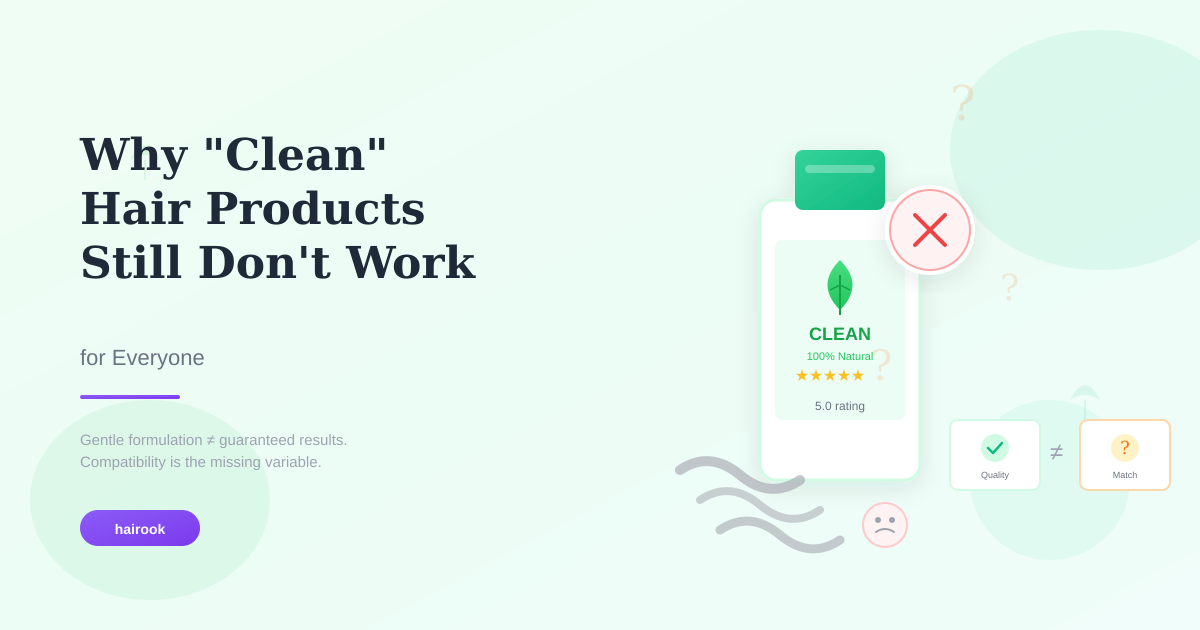
You've tried the highly-rated products. You've followed the advice from people with hair that looks like yours. You've invested in "holy grail" shampoos and conditioners that transformed everyone else's hair.
And yours still isn't cooperating.
The products sit on top without absorbing. Or they absorb instantly and your hair is dry again within hours. Your curls won't clump. Your straight hair falls flat. Nothing seems to work the way it's supposed to.
Here's what nobody told you: the problem might not be the products. It might be that you're choosing products for hair you don't actually have.
Not your hair type: your hair's porosity.
Porosity is the single most important factor in hair care that most people have never heard of. Understanding yours doesn't just help a little. It changes everything about how you should be shopping for hair products.
What Is Hair Porosity?
The Simple Explanation
Porosity describes how easily your hair absorbs and retains moisture.
Think of each hair strand as having an outer layer called the cuticle — a protective coating made of overlapping scales, like shingles on a roof. The condition of this cuticle determines how substances move in and out of your hair.
If the cuticle is tightly closed, moisture and products have a hard time getting in. If the cuticle is raised or damaged, moisture rushes in easily but escapes just as fast.
That's porosity in a nutshell.
The Three Porosity Levels
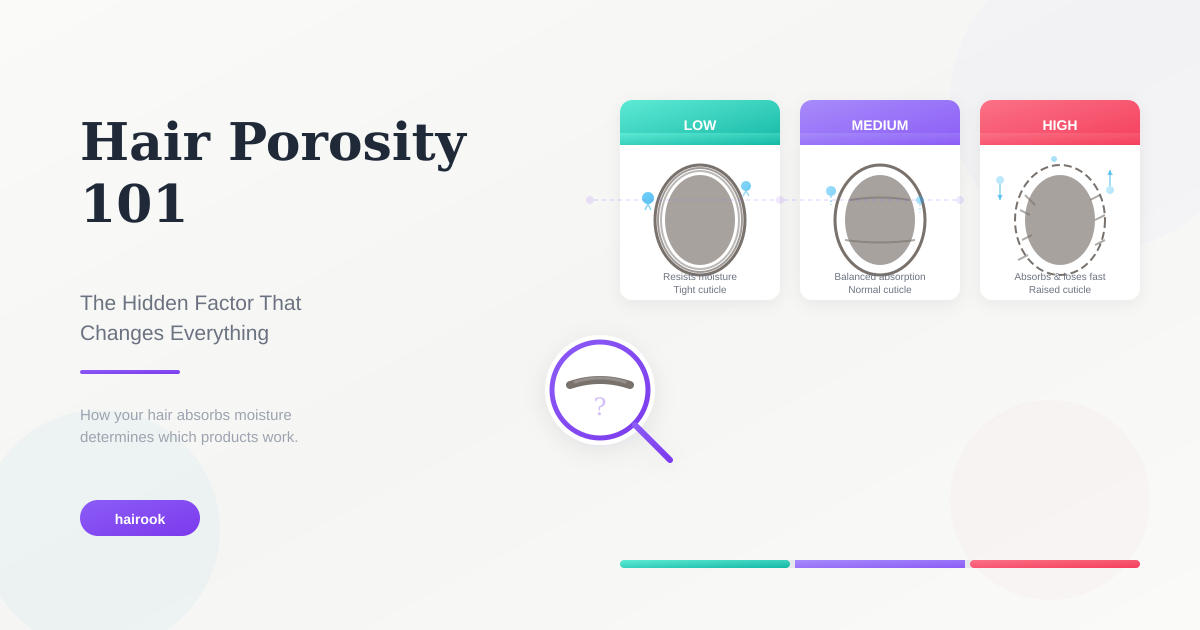
Low Porosity The cuticle layer is tightly closed, with scales lying flat and compact. Moisture and products struggle to penetrate. Hair resists absorbing water and tends to repel rather than accept what you apply to it.
Medium (Normal) Porosity The cuticle opens and closes appropriately. Hair absorbs moisture at a reasonable rate and retains it well. Products work as expected. This is the "Goldilocks" zone — not too resistant, not too porous.
High Porosity The cuticle is raised, open, or has gaps, often from damage, chemical processing, or genetics. Hair absorbs moisture very quickly but loses it just as fast. Products seem to disappear into the hair without lasting effect.
Why Porosity Matters More Than Hair Type
Most people define their hair by type: straight, wavy, curly, coily. But hair type only describes the shape of your strands. It tells you nothing about how your hair behaves.
Porosity describes behavior: how your hair interacts with water, products, humidity, and treatments.
Two people can have identical curl patterns but completely opposite porosities. One has low-porosity 3B curls that get weighed down by any conditioner heavier than water. The other has high-porosity 3B curls that drink up heavy butters and still beg for more moisture.
Same curl type. Completely different product needs.
If you've been shopping based on hair type alone and getting inconsistent results, porosity is likely the missing variable.
How to Determine Your Hair Porosity
There's no single perfect test, but combining a few methods gives you a reliable picture.
The Float Test
This is the most commonly cited method, though it has limitations.
How to do it:
- Take a few strands of clean, product-free hair (shed hairs work fine)
- Drop them into a glass of room-temperature water
- Wait 2-4 minutes and observe
Interpreting results:
- Hair floats on top → likely low porosity
- Hair sinks slowly to the middle → likely medium porosity
- Hair sinks quickly to the bottom → likely high porosity
Limitations: Product residue, oils, and hair thickness can skew results. A very fine hair strand may float regardless of porosity. Use this test as one data point, not the final answer.
The Spray Bottle Test
This test observes how your hair responds to water in real time.
How to do it:
- Start with dry, product-free hair
- Lightly mist a section with water from a spray bottle
- Watch what happens
Interpreting results:
- Water beads up and sits on hair → low porosity
- Water absorbs within a minute or so → medium porosity
- Water absorbs almost immediately → high porosity
This test is more practical than the float test because it mimics how your hair actually interacts with moisture during your routine.
The Slide Test
This test assesses the texture of your cuticle directly.
How to do it:
- Take a single strand of hair
- Slide your fingers up the strand from tip toward root
- Pay attention to how it feels
Interpreting results:
- Feels smooth throughout → low porosity (cuticle lying flat)
- Feels slightly textured → medium porosity
- Feels rough, bumpy, or catches on your fingers → high porosity (raised cuticle)
Behavioral Clues
Sometimes the most reliable indicators are simply how your hair behaves day to day.
Signs of low porosity:
- Products sit on top of hair rather than absorbing
- Hair takes a long time to get fully wet in the shower
- Hair takes a very long time to air dry
- Product buildup happens easily
- Hair feels coated or stiff after styling
Signs of medium porosity:
- Products absorb at a normal rate
- Hair holds styles reasonably well
- Color treatments process predictably
- Hair is generally manageable without extreme measures
Signs of high porosity:
- Hair gets wet almost instantly
- Hair dries very quickly
- Hair frizzes easily, especially in humidity
- Hair color fades faster than expected
- Hair feels dry even right after conditioning
- Tangles and breakage are common
Low Porosity Hair: What Works and What Doesn't
The Core Challenge
Low porosity hair has a cuticle that's essentially "closed for business." Products can't get in easily, which means:
- Moisturizers and conditioners sit on top, creating buildup
- Hair feels coated, greasy, or product-heavy
- Deep conditioning seems ineffective
- Hair looks weighed down and lifeless
The frustration is real: you're doing everything "right" but your hair acts like it wants nothing to do with your products.
What Works
Lightweight, liquid-based products. Thin, watery formulas have a better chance of penetrating a tight cuticle than thick creams. Look for leave-ins and conditioners with water as the first ingredient and minimal heavy oils.
Humectants. Ingredients like glycerin, honey, and aloe vera attract moisture from the environment and help hydrate without heaviness.
Heat. Warmth opens the cuticle temporarily. Washing with warm (not hot) water, using a hooded dryer during deep conditioning, or steaming your hair can help products actually penetrate.
Clarifying treatments. Because buildup happens easily, occasional clarifying (once or twice a month) removes accumulated residue and gives your products a fresh start.
What to Avoid
Heavy butters and thick oils. Shea butter, castor oil, and coconut oil are too heavy for most low-porosity hair. They coat the strand without penetrating, leading to greasy, limp results.
Protein-heavy products. Low-porosity hair often struggles to absorb proteins. Instead of strengthening, they can build up on the surface and make hair feel stiff or straw-like.
Product layering. More isn't better. Each layer just sits on top of the last, creating a product sandwich that never absorbs.
Application Tips
- Apply products to damp, warm hair (right after showering works well)
- Use less product than you think you need
- Focus on lightweight leave-ins rather than heavy creams
- Distribute products evenly with a wide-tooth comb
- Consider a microfiber towel or gentle scrunching rather than air-drying to prevent water-logging
High Porosity Hair: What Works and What Doesn't
The Core Challenge
High porosity hair has the opposite problem: the cuticle is raised, damaged, or has gaps. Moisture gets in easily and leaves just as fast.
This creates a frustrating cycle:
- Hair absorbs products instantly but feels dry an hour later
- Frizz is constant because moisture enters and exits unpredictably
- Hair is prone to tangling, breakage, and dullness
- Nothing seems to provide lasting hydration
High porosity is often the result of damage (heat, chemical processing, environmental exposure), but some people are genetically high-porosity.
What Works
Rich, creamy products. High porosity hair needs substance. Thick conditioners, buttery leave-ins, and heavy creams help coat and protect the porous strand.
Heavier oils and butters. Shea butter, castor oil, olive oil, and other heavy emollients help seal moisture in by filling gaps in the cuticle.
Protein treatments. Because high-porosity hair often has structural damage, protein treatments (keratin, silk amino acids, hydrolyzed wheat protein) can temporarily fill gaps and reinforce the strand.
Leave-in conditioners and sealants. Layering is actually helpful here. You want a moisture layer followed by a sealing layer to lock hydration in.
Cool water rinses. Cold or cool water helps flatten the cuticle after conditioning, improving shine and reducing moisture escape.
What to Avoid
Lightweight-only routines. Minimalist, watery products don't provide enough for high-porosity hair. You need richness.
Skipping the sealing step. If you moisturize without sealing, that moisture will escape quickly.
Over-clarifying. High-porosity hair is already vulnerable. Frequent clarifying strips what little protection exists.
Application Tips
- Try the LOC method: Liquid (water or leave-in), Oil, Cream or LCO (Liquid, Cream, Oil)
- Don't skip the sealing step
- Deep condition regularly — weekly or biweekly
- Be gentle; high-porosity hair is fragile
- Consider silk or satin pillowcases to reduce overnight moisture loss and friction
Medium Porosity Hair: The Flexible Middle
The Advantage
Medium porosity hair is relatively low-maintenance because the cuticle functions normally. It opens to accept moisture and closes to retain it.
If you have medium porosity, most product categories work reasonably well. You're not fighting against your hair's absorption tendencies.
Maintenance Focus
The goal isn't correcting extremes, it's maintaining balance:
- Occasional protein treatments to maintain strength
- Regular moisture to prevent shifting toward dry brittleness
- Flexibility to try different product types without extreme reactions
Watch for Changes
Medium porosity isn't permanent. Chemical processing, heat damage, and time can shift hair toward higher porosity.
If products that worked for years suddenly seem ineffective, your porosity may have changed. Reassess and adjust your approach accordingly.
Can Porosity Change?
What You're Born With vs. What Changes
Genetics play a role in your baseline porosity. Some people are naturally low-porosity; others are naturally higher. But porosity isn't fixed throughout your life.
Things That Increase Porosity
Porosity tends to increase over time due to:
- Chemical processing: Color, bleach, relaxers, and perms lift the cuticle and create damage
- Heat damage: Flat irons, curling wands, and blow dryers degrade the cuticle over time
- Environmental exposure: Sun, chlorine, salt water, and hard water all contribute to cuticle wear
- Mechanical damage: Rough brushing, tight styles, aggressive towel-drying
- Age: The cuticle naturally wears down over years
If your hair used to behave one way and now behaves differently, accumulated damage may have shifted your porosity.
Can You Lower Porosity?
Here's the hard truth: a damaged cuticle cannot fully repair itself.
You can't turn high-porosity hair back into low-porosity hair. The structural damage is permanent for that strand.
However, you can temporarily improve cuticle function:
- Acidic rinses (apple cider vinegar, diluted lemon juice) help flatten the cuticle
- Protein treatments temporarily fill gaps
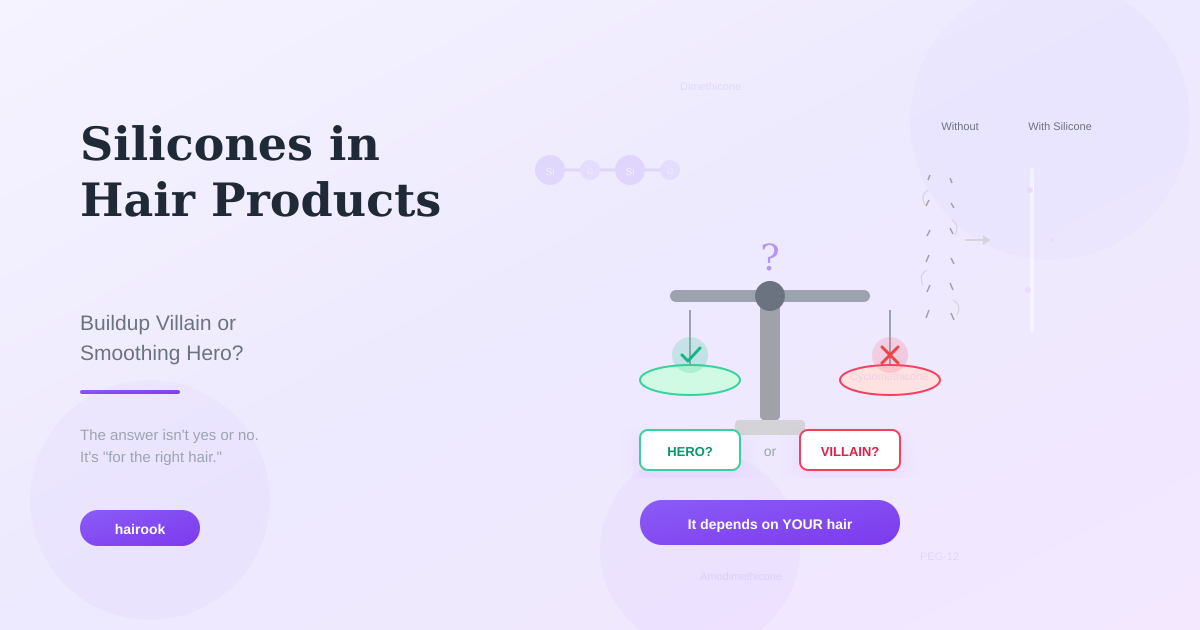
- Silicones and smoothing products coat the strand and seal the cuticle down
These are management strategies, not cures. True restoration only comes from new growth. The hair emerging from your scalp will reflect your natural, undamaged porosity.
How Porosity Should Guide Your Product Choices
The Matching Principle
Once you know your porosity, product shopping becomes dramatically simpler:
| Porosity Level | Product Approach |
|---|---|
| Low | Lightweight, liquid-based, minimal oils/butters, use heat to enhance absorption |
| Medium | Balanced, flexible, can use most product types, focus on maintenance |
| High | Rich, creamy, sealing oils/butters, protein-supportive, layer products |
Why "Good" Products Fail
This is the explanation for so many frustrating experiences:
A product perfect for high-porosity hair will suffocate low-porosity hair. All those rich butters and heavy oils just sit on the surface, creating buildup.
A product perfect for low-porosity hair will leave high-porosity hair dry and frizzy. Lightweight formulas aren't substantial enough to seal and protect porous strands.
Same product. Different hair. Opposite results.
Porosity mismatch is the hidden explanation behind most "this product doesn't work for me" experiences.
Reading Products with Porosity in Mind
When evaluating any hair product, consider:
- Heavy oils and butters near the top of the ingredient list? Good for high porosity, potential problem for low porosity.
- Proteins (hydrolyzed keratin, silk, wheat) featured prominently? Helpful for high porosity, potentially problematic for low porosity.
- Product consistency thick and creamy? Suited for high porosity. Light and watery? Suited for low porosity.
This lens helps you predict whether a product will work before you buy it.
The Bottom Line
Porosity is the hidden variable that explains why generic hair care advice so often fails.
Two people can have the same hair type, follow the same routine, use the same products and get completely opposite results. The difference is how their hair absorbs and retains moisture.
Knowing your porosity transforms product shopping from guesswork into strategy. Instead of buying based on reviews from strangers with unknown hair characteristics, you can filter for products that match your hair's actual behavior.
The goal isn't finding "good" products. It's finding products that match your hair's absorption patterns.
And if determining your porosity and matching it to products still feels overwhelming, tools that factor porosity into product recommendations can cut through thousands of options to surface the ones that actually fit your hair, not just someone else's.